Einsätze- und Wendeplattenrohlinge für die Gewindefertigung
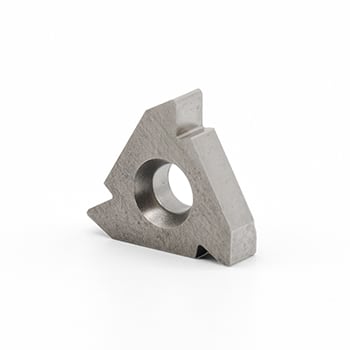
Produkttyp: Einsätze- und Wendeplattenrohlinge für die Gewindefertigung (gerade und tangential)
Beschreibung: Maßgeschneiderte, vorgeformte Hartmetall-Rohlinge für die Herstellung von Gewindeschneidwerkzeugen.
Hyperion Materials & Technologies entwirft maßgeschneiderte Einsätze- und Wendeplattenrohlinge für Hochleistungsgewindeschneidwerkzeuge, um die Herausforderungen komplexer Gewindeprofile und strenger Präzisionsanforderungen zu meistern. Mit Hartmetall-Einsätze- und Wendeplattenrohlingen für die Gewindefertigung können Werkzeughersteller Einsätze und Wendeplatten entwickeln, die präzise Innen- und Außengewinde in Bauteile schneiden.
Die mit engen Toleranzen nahezu fertig geformten Gewindeschneideinsätze von Hyperion mit geradem und tangentialem Gewinde reduzieren den Bedarf an nachträglichen Schleifarbeiten für Werkzeugbauer und verbessern die Gleichmäßigkeit und Genauigkeit des Gewindeschneidens für Endanwender. Durch die Nutzung von Formrohlingen verbringen Werkzeugmacher weniger Zeit mit der Fertigung komplexer Gewindeformen. Durch die Konzentration auf die Endbearbeitung der Kanten und die Beschichtung wird die Produktivität gesteigert und sichergestellt, dass die fertigen Gewindeschneideinsätze den strengen Anforderungen entsprechen, die in Branchen wie Automotive, Luft- und Raumfahrt, Öl und Gas sowie in der medizinischen Fertigung gestellt werden.
Herausforderungen bei der Bearbeitung von Einsätzen und Wendeplatten für Gewindeschneidwerkzeuge
Gewindeschneidwerkzeuge sind spezielle Einsätze und Wendeplatten, die dazu dienen, spiralförmige Rillen, sogenannte Gewinde, an einem Werkstück zu erzeugen. Ob Gewindefertigung auf einer Drehmaschine oder Gewindefräsen in einem Bearbeitungszentrum – Gewindeeinsätze müssen hohe Anforderungen an Genauigkeit und Langlebigkeit erfüllen.
Gewindeschneidwerkzeuge sind in Hochgeschwindigkeits- und Hochpräzisions-Metallbearbeitungsumgebungen schwierigen Bedingungen ausgesetzt, die sich auf die Leistung und Langlebigkeit der Werkzeuge auswirken. Die Einsätze- und Wendeplatten aus Hartmetall und CERMET von Hyperion sind auf die Bewältigung wichtiger Herausforderungen bei der Gewindefertigung ausgelegt, darunter:
- Komplexe Gewindegeometrie: Die Gewindefertigungseinsätze und -wendeplatten haben komplexe Schneidprofile wie 60°-Flankenwinkel, gerundete Spitzen und Wurzeln. Jedes Schneidprofil muss exakt den Standards der Gewindefertigung entsprechen. Die Bearbeitung dieser Profile aus einem einfachen Rohteil ist zeitaufwändig und fehleranfällig. Jegliche Abweichungen in der Geometrie der Einsätze und Wendeplatten können dazu führen, dass Gewinde die Maßprüfungen nicht bestehen oder nicht in die Gegenstücke passen. Die Herstellung einer vollständigen Gewindeform mit mehreren Schneidezähnen auf einer Einsatz- und Wendeplatte erfordert hochentwickelte Fertigungskapazitäten.
- Strenge Toleranzen: Gewinde müssen genaue Toleranzen für Steigung, Winkel und Durchmesser erfüllen, um eine ordnungsgemäße Montage sicherzustellen. Selbst geringfügige Abweichungen bei den Abmessungen oder dem Profil von Einsätzen und Wendeplatten können die Passgenauigkeit und Qualität des Gewindes beeinträchtigen. Werkzeughersteller stehen vor der Herausforderung, extrem enge Toleranzen bei allen Einsätzen und Wendeplatten einzuhalten, damit jedes geschnittene Gewinde den Industriestandards, einschließlich ISO- und ANSI-Spezifikationen für die Gewindefertigung, entspricht. Standardisierte Produktionsprozesse erfordern einheitliche Rohteile und eine konsistente Produktion von Einsätzen und Wendeplatten.
- Hohe Schnittkräfte und vorzeitiger Verschleiß: Bei der Gewindefertigung sind die Schneidkanten des Einsatzes kontinuierlich entlang des Gewindewegs im Einsatz, oft mit mehreren Zähnen, die gleichzeitig schneiden. Kontinuierliches Schneiden erzeugt von Natur aus erhebliche Schnittkräfte und Hitze. An anderen Stellen des Prozesses kann das Gewindeschneiden unterbrochenes Schneiden an den Gewindeenden und mehrere Durchgänge erfordern, um die volle Tiefe zu erreichen, was zu einer Ermüdung der Einsätze und Wendeplatten führt. Die Folge ist ein beschleunigter Verschleiß oder Abplatzen, wenn Material und Design der Einsätze- und Wendeplatten nicht für den Schneidprozess optimiert sind. Werkzeughersteller haben Schwierigkeiten, sicherzustellen, dass Einsätze- und Wendeplatten Spannungen standhalten und gleichzeitig eine scharfe, stabile Kante während der gesamten Gewindefertigung aufrechterhalten.
Vorteile von kundenspezifischen Einsätzen und Wendeplattenrohlingen für die Gewindefertigung
Hyperion löst Probleme bei der Gewindefertigung durch die Bereitstellung präzisionsgefertigter, nahezu endkonturnaher Einsätze- und Wendeplattenrohlinge, die genau auf die Bearbeitungsanforderungen der Werkzeughersteller zugeschnitten sind. Jeder Rohling wird mit hochentwickelten Kompaktierungswerkzeugen geformt, um einen Großteil der endgültigen Geometrie einzubeziehen, wodurch der Bedarf an umfangreichem Schleifen oder Erodieren von Profilen durch den Werkzeughersteller drastisch reduziert wird.
Die kundenspezifischen Rohlinge von Hyperion bieten Werkzeugherstellern:
- Nahezu endkonturnahe Komplexität: Bis zu 90 % der endgültigen Form einer Einsatz- und Wendeplatte, einschließlich des grundlegenden Gewindeprofils, können durch Pressen und Sintern erreicht werden. Werkzeughersteller verbringen nur minimale Zeit mit der Bearbeitung des Rohlings bis zur endgültigen Form, was Kosten reduziert und die Herstellung komplexer Gewinde ermöglicht, bei denen das Fräsen oder Schleifen aus einer Grundform schwierig wäre.
- Formrohlinge mit engen Toleranzen: Vermeiden Sie mögliche Schwankungen und Fehler in den frühen Schleifprozessen, indem Sie mit Rohlingen arbeiten, die eine hervorragende Maßhaltigkeit und eine gleichbleibende Qualität von Charge zu Charge gewährleisten. Werkzeughersteller geben diese Präzision an die Endnutzer weiter, die darauf angewiesen sind, identische Gewindetoleranzen einzuhalten und Ausschuss zu vermeiden.
- Portfolio mit fortschrittlichen Sorten: Hyperion bietet ein breites Portfolio bewährter Hartmetall- und CERMET-Sorten, vom leistungsstarken Arbeitstier H10F bis hin zu spezialisierten Sorten wie DM80, die ideal für die Gewindefertigung sind. Durch die Auswahl der optimalen Güte für das Werkstückmaterial und die Gewindeschneidbedingungen können Werkzeughersteller die Leistung von Einsätzen und Wendeplatten erheblich verbessern.
Hartmetallsorte DM80 – Entwickelt für die leistungsfähige Gewindefertigung
Die Hartmetall-Sorte DM80 von Hyperion wurde speziell für die Anforderungen der Gewindeschneidtechnik entwickelt, insbesondere unter schwierigen Bedingungen. DM80 bietet ein ausgewogenes Verhältnis von Härte und Zähigkeit, das ideal für die Gewindefertigung ist und zu einer verbesserten Zuverlässigkeit beim Schneiden schwieriger Materialien führt.
DM80 bietet eine außergewöhnliche Leistung, reduziert die Anzahl der für die Gewindefertigung erforderlichen Bearbeitungsgänge, verkürzt die Gesamtbearbeitungszeit und verlängert die Standzeit der Einsätze und Wendeplatten bei gleichzeitig hervorragender Oberflächengüte. DM80 wurde entwickelt, um eine verbesserte Zuverlässigkeit bei schwer zu bearbeitenden Materialien zu bieten und hält den Belastungen beim Schneiden von Duplex-Edelstahl, Hochtemperaturlegierungen und gehärteten Stählen besser stand. Die Kombination aus Verschleißbeständigkeit und Zähigkeit verhindert Kantenabplatzungen oder vorzeitiges Stumpfwerden.
Die Hartmetallsorte DM80 ist entscheidend für die Leistung beim Gewindeschneiden: Sie gewährleistet die Stabilität der Schneidkanten, hält den bei der Bearbeitung von rostfreien Stählen auftretenden Dauerbelastungen stand und verhindert das Festfressen. Rohlinge aus DM80 sind hitze- und verschleißbeständig und sorgen so für eine längere Standzeit der Einsätze und Wendeplatten bei der Gewindefertigung. Werkzeughersteller, die auf die DM80 setzen, können damit rechnen, Gewindeschneidwerkzeuge herzustellen, die die Ausfallzeiten selbst bei Großserienaufträgen reduzieren.
Geeignete Sorten für Einsätze und Wendeplatten für die Gewindefertigung
Hyperion bietet ein umfangreiches Sortiment an Hartmetallsorten für verschiedene Anforderungen bei der Gewindefertigung. Entdecken Sie die wichtigsten Eigenschaften und Leistungsmerkmale der Sorten, die Hyperion am häufigsten verwendet:
|
Hartmetall |
Wichtige Eigenschaften |
Anwendung und Leistung bei der Gewindefertigung |
|
DM80 |
Erweiterte Zähigkeit mit verbesserter Zuverlässigkeit unter extremen Bedingungen |
Optimiert für schwer zu bearbeitende Werkstoffe und anspruchsvolle Gewindefertigung. Hervorragend geeignet für die Gewindefertigung von Edelstählen, Superlegierungen und gehärteten Werkstoffen, bei denen eine überlegene Verschleißbeständigkeit und Zähigkeit erforderlich sind, um ein Versagen der Einsätze und Wendeplatten zu verhindern. |
|
H10F |
Benchmark-Hochleistungsqualität mit ausgewogener Zähigkeit und Härte für die Standard-Gewindefertigung |
Hervorragend geeignet für eine Vielzahl von Anwendungen, einschließlich Gewindefertigung und Fräsen von Gewinden in verschiedenen Materialien. Zuverlässige Leistung über alle Produktionsläufe hinweg. |
|
MK10 |
Hohe Härte mit hoher Kantenfestigkeit bei erhöhten Temperaturen |
Konzipiert für Hochgeschwindigkeitsdrehen und Gewindefertigung, insbesondere in Stahl. MK10 behält die Kantenintegrität bei hoher Hitze und Geschwindigkeit und ist daher ideal für schnelle Gewindeschneidvorgänge und gleichbleibende Genauigkeit ohne vorzeitigen Verschleiß bei kontinuierlichen Schnitten. |
|
AM50 |
Erhöhte Härte bei guter Zähigkeit |
AM50 zeichnet sich durch hohe Härte und Zähigkeit aus, bietet damit einen Vorteil hinsichtlich der Abriebfestigkeit und beugt Ausbrüchen beim Zerspanen härterer Werkstücke vor, wodurch es sich besonders gut zum Gewindeschneiden gehärteter Bauteile eignet. |
Einsätze und Wendeplatten für die Gewindefertigung - Anwendungen und Branchen
Die Einsätze- und Wendeplattenrohlinge für die Gewindefertigung und die daraus hergestellten Werkzeuge zum Gewindeschneiden kommen in den unterschiedlichsten Branchen und Anwendungen zum Einsatz. Überall dort, wo zuverlässige Schraubverbindungen benötigt werden, spielen leistungsstarke Einsätze und Wendeplatten für die Gewindefertigung eine entscheidende Rolle. Zu den wichtigsten Branchen und Anwendungen, die von Einsätzen und Wendeplatten für die Gewindefertigung abhängen, gehören:
- Automotive: Bei der Gewindefertigung an Motorblöcken, Zylinderköpfen, Getriebebauteilen und zahlreichen anderen Bestandteilen, die Gewindebohrungen oder Gewindebolzen erfordern, kommen Einsätze und Wendeplatten zum Einsatz. Hochwertige Gewindefertigung ist unerlässlich für die Fahrzeugmontage und -leistung. Mit robusten Einsätzen und Wendeplatten für die Gewindefertigung stellen Automobilhersteller die Zuverlässigkeit von Schraubverbindungen im gesamten Fahrzeug sicher.
- Luft- und Raumfahrt: Bei der Gewindefertigung an Flugzeugmotorbauteilen, Flugzeugrahmenteilen und Verbindungselementen, bei denen Präzision entscheidend ist, helfen Einsätze und Wendeplatten beim Schneiden der Gewinde. Turbinenkomponenten und strukturelle Bestandteile des Flugzeugrahmens erfordern häufig Gewindebohrungen, die extremen Belastungen und Vibrationen standhalten müssen. Hartmetall-Einsätze und -Wendeplatten ermöglichen die Gewindefertigung in hochfesten Legierungen wie Titan und Superlegierungen auf Nickelbasis mit der Genauigkeit und Konsistenz, die die Normen der Luft- und Raumfahrt erfordern.
- Öl & Gas: Die Förderung natürlicher Ressourcen ist auf die Gewindefertigung angewiesen. Bohrwerkzeuge, Rohrverschraubungen, Ventile und andere Ausrüstungsteile im Bohrloch sind extremen Drücken und korrosiven Umgebungsbedingungen ausgesetzt. Einsätze und Wendeplatten müssen bei der Gewindefertigung in zähe Materialien schneiden, um eine gute Abdichtung und Widerstandsfähigkeit gegenüber rauen Bedingungen zu gewährleisten. Werkstoffe wie DM80 sind besonders wertvoll, da Gewinde auch in Superlegierungen und rostfreie Stähle schneiden können, die häufig in Ölfeldausrüstung verwendet werden.
- Werkzeug- und Formenbau: Auch in der allgemeinen Produktion sind Einsätze und Wendeplatten für die Gewindefertigung unerlässlich. Von schweren Geräten bis hin zu Verbrauchsgütern erfordert jedes Gewindeteil wahrscheinlich einen Einsatz und Wendeplatte für die Gewindefertigung. Hersteller von Werkzeugmaschinen, Haushaltsgeräten, Elektronik- und Industriegeräten verwenden Einsätze und Wendeplatten für die Innen- und Außengewindefertigung.
Wenden Sie sich an einen Hyperion-Vertriebsmitarbeiter vor Ort, wenn Sie mehr über die Verbesserung der Leistung von Gewindeschneidwerkzeugen bei der Hochgeschwindigkeitsbearbeitung erfahren möchten.
